
How to Make a Painting
acrylic on canvas
60”x48”
2025

Weird Mountain Dream
acrylic on canvas
52” x 42”
2025

Lazy River/Ball Pit
42” x 50”
acrylic on canvas
2025

West Salem Art Hotel, W-S, NC, August 2025

Deep Creek
Acrylic on canvas
48”x60”

Deep Creek (detail)
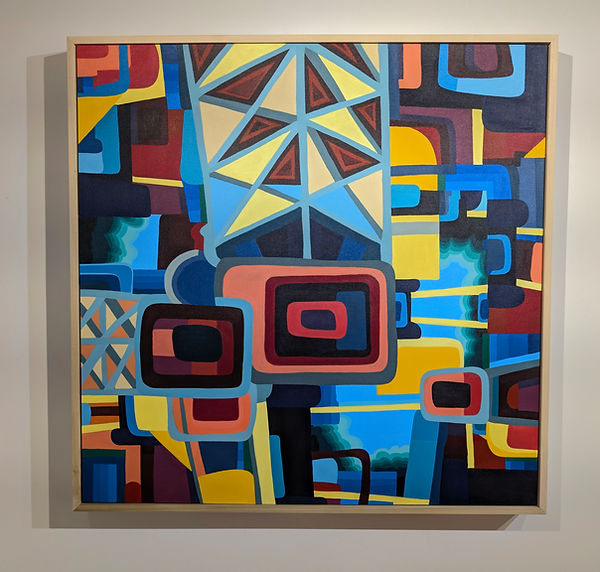
Noospheric Transmitter
Acrylic on canvas
48”x48”

Noospheric Transmitter (detail)

Invisible Landscape Magnified
Acrylic on canvas
48”x70”


Sculpture on a Beach
Acrylic on canvas
14”x11”
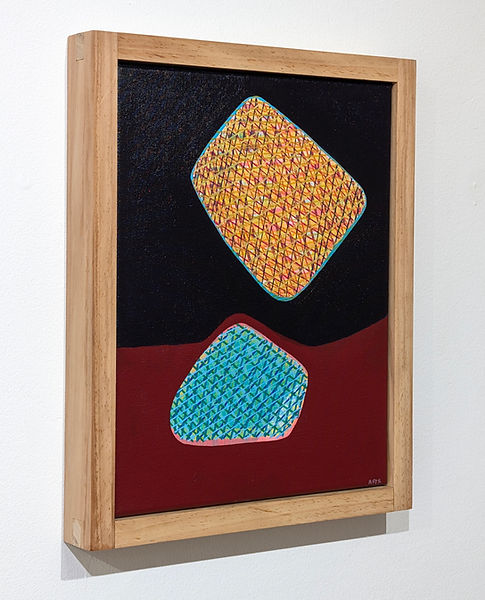
One Floating Rock, One Buried Rock
acrylic on canvas
14”x11”

Mountain Tunnel
acrylic on canvas
11x14

Bins (good at organizing bad at
staying organized)
Ink and prismacolor on paper
20"x24"

Bins (detail)
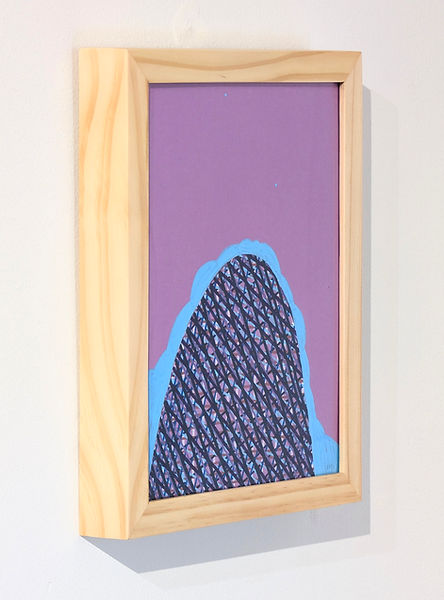
Geodesic Pile
acrylic on paper
10”x8”

Cloud With Hole
acrylic on paper
10“x8”
some clouds, a few rocks, and pictures of trees
January 2025, Culture WS

Blue? Cloud
10“x8”
acrylic on paper
These new paintings contemplate compositional problems with visual language derived from the cultural
landscape of my childhood. For me they have come to suggest a levity infused lost future of saturated color.
These are places of the imagination constructed from re-formed fragments of the world. Clouds, towers,
cartoons, skewed grids, graffiti covered buildings, and the unfathomable novelty of nature collide in the
pictorial space, arranging themselves in compliance and defiance to the modernist tradition.
The smaller drawings and collages are more direct and less precious. They are artifacts of the process and
attempts to more deeply understand the elements of the work in an isolated environment.

Some Clouds, a Few Rocks, and Pictures of Trees
Culture, W-S, NC, January 2025

Root Pile (Tulip not Poplar)
graphite, prismacolor, laser print on mylar, LED
20"x24"

Ancient Stack
sandstone
12"X16"X46"

Cloud Pile
steel
~32"x32"x40"


Picture of sun from Moore's lookout
prismacolor, graphite, laser print on mylar, LED
14"x11"

Picture of sun from Big Creek (pop tops)
prismacolor on mylar and paper, LED
14"x11'

Exoplanet WASP122b
steel
24"x18"x10"
&
Person in ditch needs a lift
prismacolor on found photograph
9"x12"


Drawing for sculpture that's hard to make.
prismacolor and graphite on paper
17"x24"

flagged
prismacolor and graphite on mylar
11"x14"
The works from this exhibition consider nature as an aggregate of ever changing information. Based in the geological, biological, and historical richness of western North Carolina the representative pieces here reflect on the novelty of moments in the backcountry ,while the abstract works explore "organization" through grid, pile, cloud, and the messiness of categorization.
Root balls erode as sites of past rebellion, having lifted stones to the sky in a last act of defiance against the gravity that pulls them back to the ground. The rocks are gathered in their custom grown net and levered back uphill in a small victory against erosion, natures most voracious sculptor; water, its most aggressive tool. {Hurricane Helene's catastrophic impact on the area adds layers of meaning here. My initial approach was in admiration of these new scenarios; mountains in miniature; the unknowing reorganization of residual chaos. Now, they are emblematic of a greater disaster locally and globally.}
The conveyor of this water, the endless ephemeral bucket that carries it back uphill to carve again, floats effortlessly despite its heft. Ever think about how much a cloud weighs? Our new conception of "cloud" as information makes me think about our own internalized organization of thought and experience as a 3(4?) dimensional Venn diagram; revealing some limitations of "the flat." It might not weigh much but that's a lot to be carrying around in your head.
"Bins" looks to this labor of organization, slowly replicating the rules set forth. Step by step the small variations become visible. The visual trickery seems an apt analogy for the distortion in processing our own experience with the world.
Perhaps my favorite method of organization, the pile, speaks doubly in Ancient Stack.
Dirt piled up, layered for ages and pressed into stone only to be cut by silly mammal into a funny shape.
(

Andrew Fansler